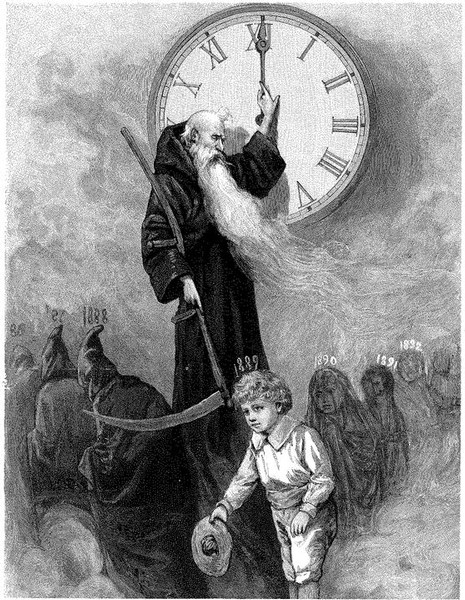
A Year End Newsletter
This time of year it has been the custom of Western nations to commemorate the birth of a son to a young Jewish girl in Israel, 2000+ years ago. Christmas traditionally falls near the winter solstice, at the coldest and darkest time of the year in the Northern hemisphere, but it is very likely that Jesus was actually born in September (1)
The gospels clearly record that Mary was unwed and a virgin when an angel from God told her she was chosen to be the long-expected woman of Israel through whom the Messiah, the Savior of the World, would be born. Joseph, probably an older man, chose to marry Mary and to raise Jesus and other children subsequently born to them.
There are many many prophecies in the Old Testament promising a future Redeemer who would come not only for Israel but for all the sons of Adam and daughters of Eve. The first announcement of this Savior--usually called the "Protevangelium"--was indirectly directed to Eve soon after the Fall of man,
"So the LORD God said to the serpent: "Because you have done this, You are cursed more than all cattle, And more than every beast of the field; On your belly you shall go, And you shall eat dust All the days of your life. And I will put enmity Between you and the woman, And between your seed and her Seed; He shall bruise your head, And you shall bruise His heel." (Genesis 3:14-15)
There is great mystery concerning the unique "seed," or descendant of Eve, who would war against, and ultimately win a cosmic contest over the "seed of the serpent." The seed of the woman, a man free of all sin in his body and in his life-style, was required to be a substitutionary, sacrificial offering for all human sin. Yet the physical mortality of both Adam and Eve showed that they had both been infected by sin to the core of their being. Mary was well aware of this when she called God "her Savior:"
And Mary said: "My soul magnifies the Lord, And my spirit has rejoiced in God my Savior. For He has regarded the lowly state of His maidservant; For behold, henceforth all generations will call me blessed. For He who is mighty has done great things for me, And holy is His name. And His mercy is on those who fear Him From generation to generation. He has shown strength with His arm; He has scattered the proud in the imagination of their hearts. He has put down the mighty from their thrones, And exalted the lowly. He has filled the hungry with good things, And the rich He has sent away empty. He has helped His servant Israel, In remembrance of His mercy, As He spoke to our fathers, To Abraham and to his seed forever." (Luke 1:46-55, compare 1 Samuel 2:1-10)
A well known prophecy in Isaiah (one of a number of powerful statements about Israel's Messiah in Isaiah), is often quoted at Christmas time:
"Therefore the Lord Himself will give you a sign: Behold, the virgin shall conceive and bear a Son, and shall call His name Immanuel." (Isaiah 7:14)
Isaiah here uses the Hebrew word almah which means "young woman" but does not necessarily imply a virgin. However in the context of this prediction by Isaiah there is clearly to be both a near-term and a long term fulfillments of this prophecy. (2) The near term fulfillment had long been past when Jewish scholars in Alexandria translated the Hebrew Bible into Greek. The Septuagint (LXX) version of Isaiah 7:14 uses the Greek word parthenos, which does clearly means a virgin who has never known a man sexually. The near-term fulfillment referred to a son being born to Isaiah's wife.
How could a virgin, a daughter of fallen Eve, contribute her ovum to the birth of what had to be a sinless male child? Arthur Custance has developed a fascinating theory to explain this genetically in his book "The Seed of the Woman" (3).
Jesus is said to be the "firstborn" or actually, the "first-begotten" of Mary,
"And she
brought forth her firstborn Son, and wrapped Him in swaddling cloths, and laid
Him in a manger,
because there was no room for them in the inn." (Luke
2:7)
The Greek prototokos, from proto, first, and tikto, to beget, makes its first New Testament appearance here in Luke 2:17. Jesus is the first-begotten of Mary. But there is much more to the word "first-begotten."
 Five passages in the New Testament make use of prototokos. In
Colossians 1:15 this Greek word is used to describe the eternal relationship
the Son of God has with the Father. Furthermore, the Son of God Himself was the
active agent in the creation of all things, and He also sustains the universe
moment by moment to the present hour.
Five passages in the New Testament make use of prototokos. In
Colossians 1:15 this Greek word is used to describe the eternal relationship
the Son of God has with the Father. Furthermore, the Son of God Himself was the
active agent in the creation of all things, and He also sustains the universe
moment by moment to the present hour.
"He is the image of the invisible God, the firstborn over all creation. For by Him all things were created that are in heaven and that are on earth, visible and invisible, whether thrones or dominions or principalities or powers. All things were created through Him and for Him. And He is before all things, and in Him all things consist. And He is the head of the body, the church, who is the beginning, the firstborn from the dead, that in all things He may have the preeminence." (Colossians 1:15-18)
Colossians 1:18 and Revelation 1:5 both state that Jesus is also the firstborn out from among the dead. So prototokos is used concerning Christ's victory over death and hell,
“Blessed is he who reads and those who hear the words of this prophecy, and keep those things which are written in it; for the time is near. John, to the seven churches which are in Asia: Grace to you and peace from Him who is and who was and who is to come, and from the seven Spirits who are before His throne, and from Jesus Christ, the faithful witness, the firstborn from the dead, and the ruler over the kings of the earth. To Him who loved us and washed us from our sins in His own blood, and has made us kings and priests to His God and Father, to Him be glory and dominion forever and ever. Amen. Behold, He is coming with clouds, and every eye will see Him, even they who pierced Him. And all the tribes of the earth will mourn because of Him. Even so, Amen. ‘I am the Alpha and the Omega, the Beginning and the End,’ says the Lord, "who is and who was and who is to come, the Almighty." (Revelation 1:3-8)
The Apostle Paul wrote,
"For God has not given us a spirit of fear, but of power and of love and of a sound mind. Therefore do not be ashamed of the testimony of our Lord, nor of me His prisoner, but share with me in the sufferings for the gospel according to the power of God, who has saved us and called us with a holy calling, not according to our works, but according to His own purpose and grace which was given to us in Christ Jesus before time began, but has now been revealed by the appearing of our Savior Jesus Christ, who has abolished death and brought life and immortality to light through the gospel, to which I was appointed a preacher, an apostle, and a teacher of the Gentiles." (2 Timothy 1:7-11)
Jesus has a special relationship with regard to His Bride, the true church, "For whom He foreknew [us], He also predestined to be conformed to the image of His Son, that He [Jesus] might be the firstborn among many brethren." (Romans 8:29)
Prototokos in the plural is used in Hebrews 12:23 about us---God's people! We are also said to be "first-begotten:"
"But you have come to Mount Zion and to the city of the living God, the heavenly Jerusalem, to an innumerable company of angels, to the general assembly and church of the firstborn who are registered in heaven, to God the Judge of all, to the spirits of just men made perfect, to Jesus the Mediator of the new covenant, and to the blood of sprinkling that speaks better things than that of Abel." (Hebrews 12:22-24)
The fact that God has become a man---the Incarnation---is a vast subject full of mystery.
Great
indeed, we confess, is the mystery of our religion:
He was
manifested in the flesh,
vindicated
in the spirit,
seen by
angels,
preached
among the nations, believed on in the world,
taken up
in glory.
(1 Timothy 3:16 RSV) (5, 6)
The fact that God became a man, means that we humans approach God through a fellow man, the second or last Adam---a wonderful Mediator between us and God the Father. The letter of Hebrews describes in great detail the experience, the compassion, the ready help we may obtain from this God-man, Jesus. A favorite passage of mine in Hebrews is the following,
"Both He who makes whole [Jesus] and we who are being made whole [us], all belong to one body (the Body of Christ); therefore He is not ashamed to call us brothers." (Hebrews 2:11).
Jesus does not stand off at a distance to save us---we who have agreed to allow Him to be our Lord and Master, are joined inseparably to Him and He to us. In this way we are freed from our sins, made new and all made whole together in Christ! (7)
Another fascinating Greek word, monogenes, appears four times in the gospel of John (and once in Hebrews 11:17) with regard to the relationship of Isaac to his father Abraham.
In John 1:14 we have, "...the Word became flesh and dwelt among us, and we beheld His glory, the glory as of [no article the in Greek] only begotten of [no article the] Father, full of grace and truth." The Son is the sole representative of the Being and Character of the One who sent Him. "The glory was that of a unique relationship and the word begotten does not imply a beginning of His Sonship. It suggests a relationship indeed, but must be distinguished from generation as applied to man. We can only rightly understand the term the only begotten when used of the Son, in the sense of unoriginated relationship. The begetting is not an event in time, however remote, but a fact irrespective of time. The Christ did not become, but necessarily and eternally is the Son. This necessitates eternity, absolute being; in this respect He is not after the Father. The expression also suggest the thought of the deepest affection as in the case of the O.T. word yachid, variously rendered "only one", "only beloved", and "darling." "...In John 1:18, "No one has seen God at any time. The only begotten Son, who is in the bosom of the Father, He has declared Him," expresses the eternal unity the Son of God has with the Father but also refers to "the ineffable love and intimacy between them the Son sharing all the Father's counsels and enjoying all His affections. Another reading is monogenes Theos, 'God only-begotten.' " ...In John 3:16 the statement, "'God so loved the world that He gave His Only Begotten Son,' must not be taken to mean that Christ became the Only Begotten Son his Incarnation. The value and the greatness of the gift lay in the Sonship of Him who was given. His Sonship was not the effect of His being given. In John 3:18 the phrase 'the Name of the Only Begotten Son of God,' lays stress upon the full revelation of God's character and will, His love and grace, as conveyed in the Name of One, who, being in a unique relationship to Him, was provided by Him as the Object of faith. In I John 4:9 the statement 'God hath sent His Only Begotten Son into the world' does not mean that God sent out into the world one who at His birth in Bethlehem had become His Son.The parallel statement, 'God sent forth the Spirit of His Son,' Galatians. 4:6 Could not mean that God sent forth One who became His Spirit when He sent Him" (W. E. Vine).
Christmas is much more than the remembering the birth of a special baby into our world. The Incarnation comes to mankind "at the end of the ages--very late in human history" (Hebrews 9:26). It is important for us to take the real meaning of Christmas very seriously. This same Jesus is due back at any time.
God will invade. But I wonder whether people who ask God to interfere openly and directly in our world quite realize what it will be like when He does. When that happens, it is the end of the world. When the author walks onto the stage the play is over. God is going to invade, all right, but what is the good of saying you're on His side then, when you see the whole natural universe melting away like a dream and something else--something it never entered your head to conceive--comes crashing in; something so beautiful to us and so terrible to others that none of us will have any choice left? For this time it will be God without disguise; something so overwhelming that it will strike either irresistible love, or irresistible horror into every creature. It will be too late then to choose your side. There is no use saying you choose to lie down, when it's become impossible to stand up. That will not be the time for choosing; it will be the time when we discover which side we really have chosen, whether we realize it or not. Now, today, in this moment, is our chance to choose the right side. God is holding back to give us that chance. It will not last forever; we must take it or leave it. (C.S. Lewis, Mere Christianity)
Understanding and knowing this man Jesus in a personal way is the greatest experience we humans can every experience. Jesus is able to save "to the uttermost" all who come to God through Him. "Neither is there salvation in any other, for there is no other name under given among men whereby we must be saved" (Acts 4:12) At Christmas time we who know Jesus look not only back in time two millennia to His humble birth, we also eagerly await to His soon return.

Come,
Thou long expected Jesus
Born
to set Thy people free;
From
our fears and sins release us,
Let us
find our rest in Thee.
Israel's
Strength and Consolation,
Hope
of all the earth Thou art;
Dear
Desire of every nation,
Joy of
every longing heart.
Born
Thy people to deliver,
Born a
child and yet a King,
Born
to reign in us forever,
Now
Thy gracious kingdom bring.
By
Thine own eternal Spirit
Rule
in all our hearts alone;
By
Thine all sufficient merit,
Raise
us to Thy glorious throne.
(Charles Wesley)
by Ron Graff
(RonGraff@aol.com)
It came as a big surprise to the Early Church to realize that Jesus' death and resurrection were the fulfillment of important feast days that Israel had observed for ages. He died on Passover, and was raised from the dead three days later at the Feast of First fruits! Then, on the next feast day, Pentecost, His promise of the gift of the Holy Spirit was fulfilled (Acts 2). The effect of this was to give additional proof or validation that Jesus was who He claimed to be. These holy days were symbolic of things to come. According to Colossians 2:16-17:
"Therefore do not let anyone judge you by what you eat or drink, or with regard to a religious festival, a New Moon celebration or a Sabbath day. These are a shadow of the things that were to come; the reality, however, is found in Christ."
It has been noticed that many other important events in Israel's history took place on the anniversaries of their holy days. Students of prophecy could not help but notice that the next festivals on the Jewish calendar could have special meaning for future events. We do not believe in setting dates, but there is possibly a connection between these feasts, which followed Pentecost, and key events of prophecy. Rosh Hashanah, the ancient Jewish New Year's Day, is also called the Feast of Trumpets. Wouldn't that be a fitting time for the Rapture of the Church (at the last trumpet)? Yom Kippur, the most solemn day of the Jewish year, is the Day of Atonement. Perhaps this will the festival which will be fulfilled by Christ's glorious appearing, when there will be great mourning for the one whom we have pierced. Then there is The Feast of Tabernacles, symbolizing the presence of God in our midst. This would be a most appropriate time for ushering in the Millennial Kingdom of the future.
The Christmas Connection
Could it be that Jesus' birth was also on one of Israel's holy days? Let's consider some of the possible connections here. Please notice that we are not dogmatic about this. We will have to wait until we get to heaven to know for sure, but these are exciting possibilities!
Birth of John the Baptist
John's father, Zechariah, was a priest, and it was during his cycle of duty that he was told that John would be born. Careful scholars have determined that, since Zechariah's family was eighth in the rotation of priests, that Zechariah's first service of the year would be about June (of our calendar). If John was actually conceived at this time, he could very well have been born at Passover, nine months later. This is a fascinating thought because Jesus said that John had come in the spirit of Elijah. At every Passover an empty place is set for Elijah, and someone is sent to the door toward the end of the evening to see if he has come yet!
Birth of Jesus
Jesus was born six months after John. If John was born at Passover, this would place Jesus' birth at the time of the fall festivals (Rosh Hashanah, Yom Kippur, Feast of Tabernacles). The Feast of Tabernacles would be an exceptionally meaningful time for the birth of Christ, since the tabernacles, or booths symbolized God's dwelling with His people, and John starts his Gospel by affirming that Jesus, who is the Word of God, actually became flesh and dwelt ("tabernacled") among us! (John 1:1, 14) This, by the way, would be a time of year when the shepherds would still be with their sheep in the fields. This is not the case in December. In the Middle Ages, at this time of year, Michaelmas ("Coming of Michael the Archangel") was celebrated. This could be symbolic of the angelic choir which announced Christ's birth. But what of the traditional date of December 25th? Skeptics tell us that this was a date chosen for convenience and because it corresponded with pagan winter celebrations, such as Saturnalia. There is some historical evidence for this view, but consider one further, very interesting point.
Jesus' Conception
If, in fact Jesus was born at the Feast of Tabernacles, His conception would have been nine months earlier, just at the time of Hanukkah, The Feast of Lights! Because of the difference between the Jewish calendar and our own calendar, Hanukkah is sometimes a few weeks before Christmas, but it is sometimes very close to it. The Jewish festival is based on God's miraculous provision of light during the days of the Maccabees. Again, how very appropriate it is to celebrate the coming of the One who is The Light of the World! (John 1:4-9; 8:12)
"Messiahmas, on the Birth of Jesus of Nazareth," and "The Roots of Christmas," by Chuck Missler http://www.ldolphin.org/xmas.html.
Also see, "The Meaning of Christmas" by Mike Gascoigne, http://www.annomundi.co.uk/bible/index.htm.
"O Come Immanuel" by Ray Stedman,
"The Seed of the Woman," by Arthur Custance, http://custance.org/Library/SOTW/Index.html.
"What Holds the Universe Together?"
"The Central Glory," by Ray Stedman
A great passage concerning the incarnation, a text worth repeated study and meditation is found in Philippians,"Let this mind be in you which was also in Christ Jesus, who, being in the form of God, did not consider it robbery to be equal with God, but made Himself of no reputation, taking the form of a bond servant, and coming in the likeness of men. And being found in appearance as a man, He humbled Himself and became obedient to the point of death, even the death of the cross. Therefore God also has highly exalted Him and given Him the name which is above every name, that at the name of Jesus every knee should bow, of those in heaven, and of those on earth, and of those under the earth, and that every tongue should confess that Jesus Christ is Lord, to the glory of God the Father." (2:5-11)
Christmas 2020. Ted Wise and enjoyed the privilege of spending a month in India in 1971, a mere fifty years ago.

December 17, 2005
December 10, 2018
December 26, 2020