Stumbling Stones on the Path to Wholeness

A good many enthusiastic new Christians--myself included--made a decision in their early Christian life to read straight through the entire Bible. Those who have tried this daring plan, usually make it through Genesis and Exodus just fine--and then crash a short way into Leviticus. I did. Leviticus is one of several enigmatic books of the Bible which, though fully inspired and God-given does not yield its secrets easily.
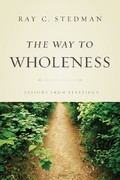 Discovery
House Publishers, with the skilled help of James Denney, put into
print a classic series of studies on Leviticus originally presented many
years ago by the late Ray C. Stedman. Teaching Leviticus in 2005 with the help Ray's
earlier messages has been a rich and insightful experience. The Royal Road to Wholeness is my series. See also, The Lord Who Heals.
Discovery
House Publishers, with the skilled help of James Denney, put into
print a classic series of studies on Leviticus originally presented many
years ago by the late Ray C. Stedman. Teaching Leviticus in 2005 with the help Ray's
earlier messages has been a rich and insightful experience. The Royal Road to Wholeness is my series. See also, The Lord Who Heals.
Overview of Leviticus by Ray Stedman. Complete series by Ray: http://raystedman.org/leviticus/.
The first seven chapters of Leviticus present in detail five specific offerings for sin given to Israel by the Lord at Mt. Sinai to accompany the Law of Moses. Each of these offerings is a shadow, a type, full of symbols pointing to the great and final sacrifice for sin which would come later in history when Jesus the Son of God would die on a bloody cross to fully reconcile a lost and sinful mankind to a holy and just God.
The theme of Leviticus is given in 20:26: "You shall be holy to me; for I the LORD am holy and have separated you from the peoples, that you should be mine."
Ray Stedman comments,
"Perhaps you were turned off right away by the word holy in this passage. I do not know what you think holy means. You probably read into it things from your past experience which make it unpalatable to you. Most of us associate it with some kind of grimness. We think of holy people as those who look as if they have been steeped in vinegar or soaked in embalming fluid. I used to think of the word that way, and holiness was not attractive to me at all. It repelled me. But I ran across a verse in Scripture which spoke of "the beauty of holiness" (1 Chronicles 16:29, 2 Chronicles 20:21, Psalms 29:2, 96:2). I asked myself, "What in the world is beautiful about holiness?" When I found out I agreed that holiness is indeed a beautiful thing...
Others associate it with strangeness, apartness, as though holy people are weird, peculiar individuals who live out in the desert somewhere, remote from the rest of us. We think of them as "different."
But the Bible itself suggests none of these ideas concerning holiness. If you want to get at the meaning of this word you must go back to its original root. This word is derived from the same root from which a very attractive English word comes. This is the word wholeness. So that holiness means "wholeness," being complete. And if you read wholeness in place of holiness everywhere you find it in the Bible you will be much closer to what the writers of that book meant. We all know what wholeness is: It is to have together all the parts which were intended to be there, and to have them functioning as they were intended to function.
That is what God is talking about. He says to this people, "you shall be whole, because I am whole." God is complete; he is perfect. There is no blemish in God; he lives in harmony with himself. He is a beautiful person. He is absolutely what a person ought to be. He is filled with joy and love and peace. He lives in wholeness. And he looks at us in our brokenness and says to us, "You, too, shall be whole."
That word wholeness has power to awaken desire within us. We long to be whole people. Don't you? Don't you want to be what God made you to be, with all the ingredients of your personality able to be expressed in balance. That is to be a beautiful person, and that is what God is after. That is what the book of Leviticus is all about. In fact, the whole Bible is on that theme.
We are so aware of our own brokenness, of our lack of wholeness. We know how much we hurt ourselves and each other. We are aware of our inability to cope with life. We sometimes put up a big facade and try to bluff our way through as though we are able to handle anything. But inside, half the time, we are running scared. That is a mark of our lack of wholeness. We also know our diabolical power to irritate, to enrage, and to inflame others -- and ourselves...
Man has lost his way. He was made in the image and likeness of God. When man first came from the hand of God he was whole. Adam functioned as God intended man to function. He was functioning in the image and the likeness of God. But now we have lost that likeness. We still have the image, but the likeness is gone. God determines to heal man's brokenness and to make man whole again. And he knows how to do it -- he says so: "You shall be whole; for I am whole, and I have separated you from the peoples." It is a process of separation. The reason we are so broken is that we are involved in a broken race: Our attitudes are wrong. Our vision of life is twisted and distorted. We believe illusions, take them to be facts, and act upon them. We are following phantoms and fantasies and delusions.
So God must separate us. He has to break us loose from conformity to the thought patterns and the attitudes and reactions of those around us. He has to deliver us from all that, straighten out our thinking, set our minds and hearts aright, and correct our tangled, fouled relationships. This is a process which takes infinite patience and love, because it is voluntary -- God never forces us into it. It can occur only to those who trust God enough to respond to his love." (http://raystedman.org/leviticus/0501.html)
 Today we perceive
the sacrifice of Christ on the cross as an all-in-one event, but in Leviticus
the five different offerings for sin under the Old Covenant expand our
understanding of how God's love solves our problems through Jesus in a complete
way.
Today we perceive
the sacrifice of Christ on the cross as an all-in-one event, but in Leviticus
the five different offerings for sin under the Old Covenant expand our
understanding of how God's love solves our problems through Jesus in a complete
way.
The central sacrifice in Leviticus, and throughout the whole Old Testament, was the whole burnt offering. This comes first in the list of five offerings. In great detail the proper protocols of these sacrifices are described for us. Looking backwards from the New Testament we can now see that God was meticulous in preserving every aspect of the types which would later find their full realization in Jesus.
The whole burnt offering was followed by the meal offering--the presentation of grain or bread (the only non-blood offering).
The third offering was the peace offering. Taken together these three offerings express God's complete and unconditional love and acceptance of us on the grounds of the sacrifice of His Son for all our sins.
In the whole burnt offering God expresses His desire for each of us to enter into a personal relationship with Him--and to belong to Him. The meal offering is meant to signify our consent. No relationship can occur without the consent of both parties! The third offering assumes that the first two have taken place. The immediate result is the peace of God.
Offering number four, the sin offering shows God's complete provision for all our sins in Christ. Equipped with the loyal-love and indwelling strength of Christ, symbolized by the first three offerings, we are ready and able to begin to address the causes of our brokenness and how we may be healed. The sin offering primarily concerns our vertical relationship with God. The last and final offering, the trespass offering, addresses our need for the healing of relationships with family and friends, with our fellow Christians and with other people we know and relate to in life.
Ray Stedman's remarks are most helpful. He says,
The Message in the Order of the Sacrifices: ...we see that the order of the offerings is significant. This fourth offering comes only after the first three, which have dealt with the basic needs of men and women for love (the burnt offering), joy (the grain offering), and peace (the peace offering). Love, joy, and peace are the basic needs of human life. Without them, we cannot function effectively as human beings. This is the same order that these fruits of the Spirit are listed in Galatians 5:22-23--love, joy, and peace.
Only after symbolically dealing with these basic human needs does God begin to talk about sin and trespass, the next two offerings. In the final two offerings, God deals with another basic requirement of humanity. We need not only the positive virtues of love, joy, and peace, but also to behave as responsible individuals. The sin and trespass offerings call us to act responsibly toward God and toward the people around us.
It is important to notice the order of the five sacrifices because the sacrifices tell us something important about the mind of God. Notice where He begins. While all five of the sacrifices of Leviticus were fulfilled in the sacrifice of Jesus on the cross, each sacrifice expresses a different aspect of His death, a different blessing that flows from His sacrifice. The first three blessings that come to us from the sacrifice of Jesus are love, joy, and peace. That is what the first three sacrifices speak of.
Then, in the final two sacrifices, the sin and trespass offerings, we see yet another blessing that flows to us from the cross of Christ: the forgiveness of sin. Now consider this: What is the first blessing we always think of when we reflect on the cross of Christ? Forgiveness! We always start our understanding of the cross with the issue of forgiveness--but that is not where God starts!
When we preach the Christian gospel, the first thing we usually say is, "You're a sinner! You need to be forgiven!" And sometimes we thunder away with hellfire and damnation at people in order to get them under conviction, to make them aware of the guilt that results from their sins. Its true, of course, that God wants to talk to human beings about sin. Men and women can never solve their problems until they solve the sin problem.
But we must remember that this is not where God starts. He begins by talking about love, joy, and peace. He provides these three blessings first. Then He says, "Now let's get at the heart of the problem that separates us." Isn't that marvelous? (http://raystedman.org/leviticus/leviticus.html).
Can a person get stuck along God's path to wholeness? Are there obstacles to overcome along the way of Christ? Evidently there are.
Many people appreciate learning that they are loved by God, accepted by Him. They further appreciate the teaching of the Bible that Jesus died for their sins.
"For God so loved the world that He gave His only Son so that whoever would believe in him should not perish but might have ever lasting life. "
"...if anyone sins, we have an Advocate with the Father, Jesus Christ the righteous. And He Himself is the propitiation for our sins, and not for ours only but also for the whole world." (1 John 2:1-2)
Casual inquirers may take the promises of God for granted and go no further. God's love is apparently unconditional and perhaps they mistakenly assume no response is called for on their part. This group of people--we might say--has moved to the first milestone on the path that leads to wholeness. In the short term these individuals are probably better off than total unbelievers--in the long term they are in serious trouble if they don't take the next steps. This group of nominal believers may change their life styles so as to appear to be Christians but they are not yet in His family, because they have never given assent to God's invitation to enter into a personal relationship with Him through Jesus.
One finds clears warnings in the Bible to the large multitude of professing Christians who bask in the knowledge of God's love for them, but never respond by opening their hearts to Him.
"Not everyone who says to Me, 'Lord, Lord,' shall enter the kingdom of heaven, but he who does the will of My Father in heaven. "Many will say to Me in that day, 'Lord, Lord, have we not prophesied in Your name, cast out demons in Your name, and done many wonders in Your name?' "And then I will declare to them, 'I never knew you; depart from Me, you who practice lawlessness!' (Matthew 7:21-23)
Step Two for those who wish to follow Jesus (symbolized by the meal offering) is our acceptance and response to God. We must each personally respond to God's Love: "I accept your love and would like to belong to you. My life is yours, Lord Jesus be Lord of my life." A surrender of heart, mind, and will is what God expects of us.
The group of professing Christians who makes this commitment to a personal relationship with God through Jesus has overcome the second obstacle on the road to wholeness. Actually a responsive commitment to God is a serious covenantal relationship--not unlike entering into as marriage agreement. We can not agree to belong to God and then fail to move further to discover what He has called us to--what he expects from us. Contrary to popular ideas, God has a number of clearly stated long-term goals for us (several are stated in Ephesian chapter one for instance).
Those who know Jesus but neglect to go further and deeper in a walk with Jesus are stuck in what amounts to kindergarten--spiritual infancy. One finds warnings in the New Testament that remind us that we are called to move beyond a beginner's superficial response to God.
"For though by this time you ought to be teachers, you need someone to teach you again the first principles of the oracles of God; and you have come to need milk and not solid food. For everyone who partakes only of milk is unskilled in the word of righteousness, for he is a babe. But solid food belongs to those who are of full age, that is, those who by reason of use have their senses exercised to discern both good and evil." (Hebrews 5:12-14)
The third offering in Leviticus--the peace offering--which follows the burnt offering and meal offering--seems to coincide with what the New Testament calls "entering God's rest." Jesus calls us to cease from our own self-efforts and to allow Him to live in and through us. Only then do we have peace, and only then does our partnership with Jesus allow us to move to the third and fourth stages of the path to wholeness.
Jesus...said, "I thank You, Father, Lord of heaven and earth, that You have hidden these things from the wise and prudent and have revealed them to babes. Even so, Father, for so it seemed good in Your sight. All things have been delivered to Me by My Father, and no one knows the Son except the Father. Nor does anyone know the Father except the Son, and the one to whom the Son wills to reveal Him.
"Come to Me, all you who labor and are heavy laden, and I will give you rest. Take My yoke upon you and learn from Me, for I am gentle and lowly in heart, and you will find rest for your souls. For My yoke is easy and My burden is light." (Matthew 11:25-30)
So important is the true Sabbath rest of the believer --which fulfills the Old Testament shadow of the sabbath day--that a large section of the epistle to the Hebrews deals with this topic. (See "Jesus is our Sabbath Rest, by Ray Stedman, http://ldolphin.org/sabbathrest.html).
Ray Stedman calls our attention to the total involvement Jesus wishes to have with us in our phase of our spiritual journey:
"So far in Leviticus, God has been using animal sacrifices as pictures to show us that we human beings need a sacrifice, a substitute. No one can handle the problems of life alone. No one can solve the sin problem alone. That is the lesson of history and of our individual lives. In picture after picture, sacrifice after sacrifice, God tells us that the solution to our problems is this: We need a substitute, a sacrifice, to die in our place. Only if we accept God's perfect sacrifice as the solution for our problems can we have the basic needs of life met: love, joy, peace, forgiveness, and restored relationships with the people around us. That is what the five sacrifices of Leviticus 1-7 have been teaching us..."
"God is not really interested in our religious activities, our religious busyness, our religious fervor or emotionalism. He is interested in the kind of character we display. He wants us to be whole and holy. In our homes, in our businesses, in our schools, in our neighborhoods, He wants people to see His holy character shining through our lives, expressed through the qualities of love, joy, peace, forgiveness, patience, and understanding we show to the people around us. That is the character of a whole person."
The more difficult aspects of our journey to wholeness are symbolized for us by the sin and trespass offerings. God first lets us know how fully we are forgiven and how complete are His provisions for us--especially His loyal-love and always-available strength. Many Christians stop at the peace offering stage and go no further. But becoming a whole person demands much more of us. The sin offering reminds us that after we come to know God we need to embark on a life-long journey of self-examination, growth in the knowledge of the Lord, and putting into practice what we learn, day by day. Repairing and maintaining our vertical relationship with God comes first. When we have begun this part of our journey we are ready to deal with our interpersonal relationships which also healing and repair.
We can not enjoy a more intimate or better relationship with a fellow human being than our relationship with Jesus. Nor can we reverse the order of the first two commandments--to love God first, and then our neighbor as our self.
A good example of what happens when we fail to deal with sin in our lives is illustrated by Psalm 32 (and the related Psalm 51). These are David's Psalms of repentance nearly a year after his murder of Uriah and adultery with Bathsheba.
Blessed is he whose transgression is forgiven, Whose sin is covered. Blessed is the man to whom the LORD does not impute iniquity, And in whose spirit there is no deceit. When I kept silent, my bones grew old Through my groaning all the day long. For day and night Your hand was heavy upon me; My vitality was turned into the drought of summer. I acknowledged my sin to You, And my iniquity I have not hidden. I said, "I will confess my transgressions to the LORD," And You forgave the iniquity of my sin. (32:1-5)
Ray Stedman continues,
...There was only one inflexible requirement [regarding the sin and trespass offerings]: that the sinner admit his or her sin. The individual had to confess to the act of wrongdoing against God. It wasn't that God demanded repayment for the sin. Human beings cannot repay God for sinning against Him. But God required that people make restitution, if only to the extent of confessing that the act of wrongdoing was truly wrong. Confession of sin was essential to obtaining forgiveness through the sacrificial offering of the animal.
The truth that is depicted here in these sacrifices is the same truth we read about in the New Testament letters of John: "If we claim to be without sin, we deceive ourselves and the truth is not in us. If we confess our sins, he is faithful and just and will forgive us our sins and purify us from all unrighteousness" (1 John 1:8-9).
God insists that we admit and confess our sin--not because He wants to humiliate us but because confession is necessary in order for us to receive the forgiveness which He has already provided. It isn't that God forgives us at the moment we confess. He has already forgiven us. But we can't accept that forgiveness until we see and understand the truth about what we have done. That is why it is necessary for us to admit our wrongs before we can experience His cleansing forgiveness.
This is a fundamental principle for curing broken relationships within human society. We must come to a place where we face and admit our sins. We must admit our sin specifically, clearly, and unequivocally. It does no good to simply say, "If I have offended you, please forgive me." That word "if" cancels out everything else you say. It is a denial of your own recognition of sin. When someone says, "If I have done something wrong," he is really saying, "You may see what I did as wrong, but I don't, and I won't admit it. If you think I did something wrong, then I'm sorry you feel that way, but I don't agree." That is not an admission of guilt, and it does not result in healing, forgiveness, or a reconciled relationships.
There are times in human relationships when we must do things that are right but painful, such as confront people who are living in a sinful lifestyle. At such times, we can be sorry that we have to hurt someone by speaking the truth to them in love--yet we are not sinning by doing so, we are doing what is right. A doctor may say, "I'm sorry" when doing something that causes a patient to feel pain--but the doctor is not doing something wrong. Sometimes a doctor must cause a little pain in order to bring about healing. So we need to understand that not every incident of causing pain or hurt to someone else is necessarily a sin.
But when we do sin against other people, God wants us to admit it to ourselves and confess it to God and to the person we have sinned against. God wants us to come to a place where we say, 'Yes, I was wrong. I sinned, and I have no excuses to offer. Please forgive me."
Only at this point can a relationship be restored. In most broken relationships, it is necessary for both parties to seek forgiveness. Each person must begin with himself or herself. As Jesus said, "First take the plank out of your own eye, and then you will see clearly to remove the speck from your brother's eye" (Matthew 7:5).
Jesus talked about this very principle when He said, "Therefore, if you are offering your gift at the altar and there remember that your brother has something against you, leave your gift there in front of the altar. First go and be reconciled to your brother; then come and offer your gift" (Matthew 5:23-24). God is more pleased with our integrity and our healed relationships than He is with our religious offerings.
God provided the trespass offering and fulfilled it in Jesus Christ, so that we might heal the broken relationships of the past and live our lives with a clear conscience. If you want to have a vital relationship with God, you may need to heal the broken relationships of the past--relationships with friends, neighbors, and family members. You may need to make restitution and confess your sins and errors. But once you do, those relationships will be healed before God, and you will experience emotional and spiritual freedom for the rest of your life.
...it is important to remember why God instituted not only a program of sacrifices to God but also a program of restitution and forgiveness between human beings. God understands human nature and human need, because He created us. He knows that we can't live joyfully and effectively when our relationships are in shambles.
When we bring our broken relationships to Jesus, He will heal them, transform them, and restore them. That is the provision God made for us through the trespass offering, and that is the provision Jesus made for us on the cross of Calvary.
The Importance of Leviticus Today:
1. The call to God's people to be a separated and holy people is seldom preached and rarely followed by today's professing Christians. Christian life styles in America today are rarely much different from the lifestyles of the pagans around us.
2. The majority of professing Christians apparently take God's love for granted and do not realize that He is calling us into a covenant relationship which will cost from us all that we are and were in Adam:
Then He said to them all, "If anyone desires to come after Me, let him deny himself, and take up his cross daily, and follow Me. For whoever desires to save his life will lose it, but whoever loses his life for My sake will save it. For what profit is it to a man if he gains the whole world, and is himself destroyed or lost? For whoever is ashamed of Me and My words, of him the Son of Man will be ashamed when He comes in His own glory, and in His Father's, and of the holy angels." (Luke 9:23-26)
3. The hard part of following Jesus--symbolized by the sin and trespass offerings in Leviticus--concerns our daily walk with Jesus in which we examine ourselves in the light of God's word, change every aspect of our life-styles we discover are out of harmony with God, and, lastly, work diligently on our relationships with those around us. We are to be "imitators of those who through faith and patience obtained the promise" (Hebrews 6:12).
4. The emphasis in the Old and the New Testaments is not so much about individual salvation, but on the integrity and overall well-being of an entire covenant community--whether the community is believing Israel or the true church.
5. We must not take God for granted but take Him seriously--"the fear of the Lord is the beginning of wisdom."
Therefore gird up the loins of your mind, be sober, and rest your hope fully upon the grace that is to be brought to you at the revelation of Jesus Christ; as obedient children, not conforming yourselves to the former lusts, as in your ignorance; but as He who called you is holy, you also be holy in all your conduct, because it is written, "Be holy, for I am holy."
And if you call on the Father, who without partiality judges according to each one's work, conduct yourselves throughout the time of your stay here in fear; knowing that you were not redeemed with corruptible things, like silver or gold, from your aimless conduct received by tradition from your fathers, but with the precious blood of Christ, as of a lamb without blemish and without spot. He indeed was foreordained before the foundation of the world, but was manifest in these last times for you who through Him believe in God, who raised Him from the dead and gave Him glory, so that your faith and hope are in God.
Since you have purified your souls in obeying the truth through the Spirit in sincere love of the brethren, love one another fervently with a pure heart, having been born again, not of corruptible seed but incorruptible, through the word of God which lives and abides forever, because "All flesh is as grass, And all the glory of man as the flower of the grass. The grass withers, And its flower falls away, But the word of the LORD endures forever." Now this is the word which by the gospel was preached to you. (1 Peter 1:13-25)

Library Home Page: http://ldolphin.org/asstbib.shtml
Updated July 4, 2020.